Hydrographic survey
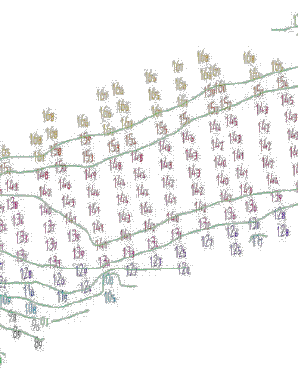
Hydrographic surveys are performed to assess the bottom conditions and or relief of a water body. The relief data can be used as a means of further analysis for: search and rescue, monitoring change, assessing damages, engineering design for marine construction, pre-dredge requirements, and confirming as-built or post-dredge conditions are consistent with design. For many small scale surveys depicting the top of bottom (first return) single frequency echosounders with one or more single beam transducers are widely used. For larger scale surveys depicting a much higher resolution multibeam echosounders are used. Dual frequency echosounders may be used for performing bottom classification such as quantifying muck, fluff or organic layers. In most cases, it is desirable to have a user-defined, interactive display that provides a means of: configuring, logging and displaying the echosounder data, creating "track" lines, and displaying both graphic and textual guidance as the hydrographic vessel progresses down the track lines. The software must also be able to process the echosounder data and export in a variety of formats. In addition, the software should allow for addressing tides (water surface elevation), heave, pitch, roll, squat, and draft. These criteria help ensure that the survey data is not only accurate but that it is collected efficiently and systematically and with accountability.

All Rights Reserved